What are ODS Alloys and Why Do They Matter?
One of the most important materials in modern high-energy research is the oxide dispersion strengthened (ODS) alloy. Although known for over a century, these materials have taken new prominence with the use of laser bed fusion and resonant acoustic mixing.
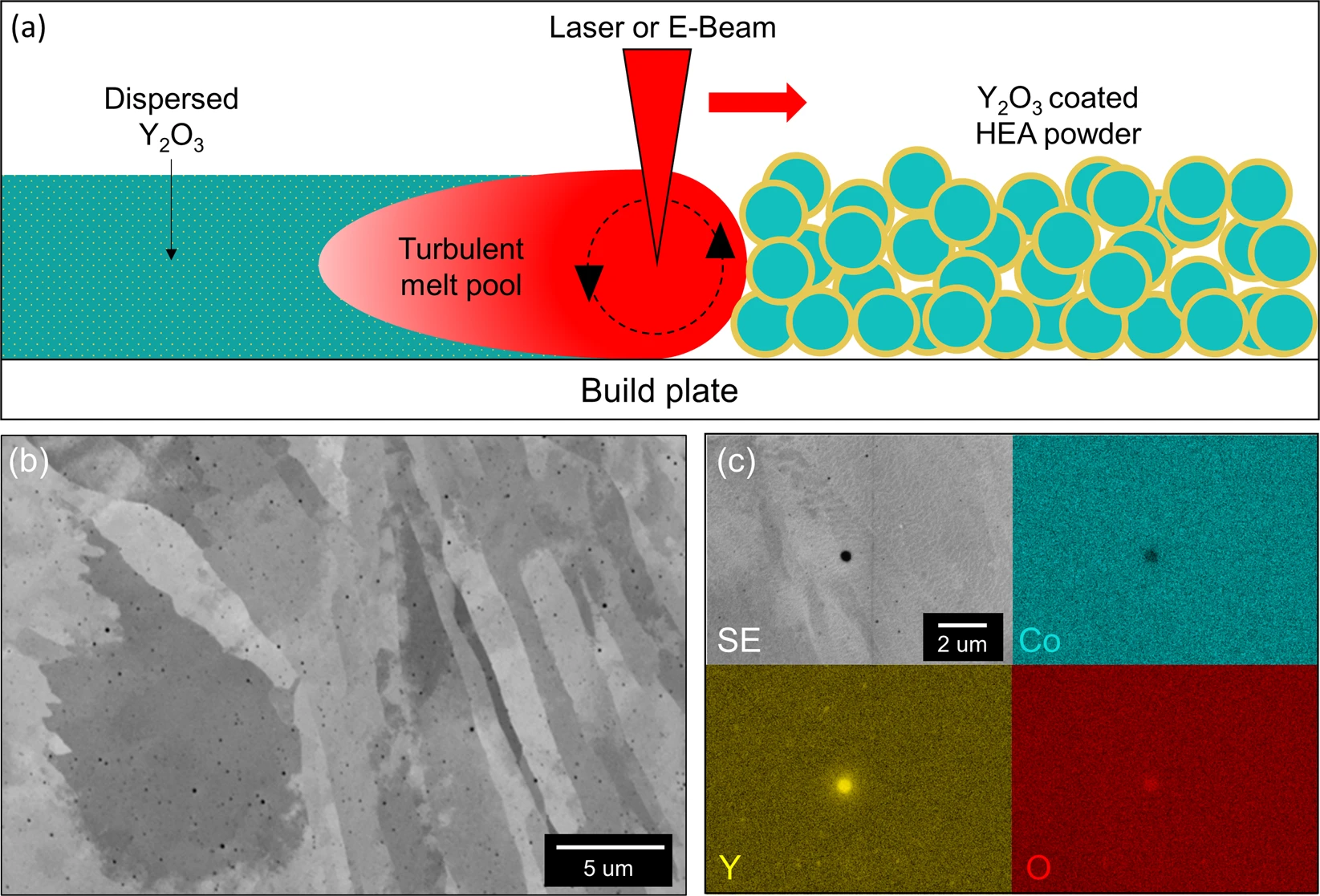
These materials are created by including oxides with a metal system. The exact oxides and metals vary based on the intended result. For example, GRX-810 is made from NiCoCR alloy and yttria oxide, making it useful in extremely high-temperature situations. A near-infinite number of combinations are possible.
The strengthening mentioned in the name comes from how the oxides alter the consistent lattice of metal particles. These interruptions make splits along lattice planes much more energy intensive, staving off creep and other deformation. [1]
Notably, discovery and production of ODS alloys is only recently feasible, through a NASA breakthrough using ResonantAcoustic® technology.
Stopping the Creep
One of the major concerns for these alloys is creep deformation. Over time persistent stress leads to changes. This slow deformation can lead to complete failure. Any increase in creep life represents a piece of equipment that will need to be replaced less often and can be trusted over a longer time.
Because of the unique factors of the combined structure, ODS alloys are being developed for high-temperature environments, like turbine blades, heat exchangers and nuclear plants. Current materials used in these environments often suffer from shorter lifespans.
So far, ODS alloys are primarily nickel-based, but iron and aluminum are also used. There’s even some use of noble metals. Each material, alloy, and oxide needs to be matched to the correct need.
NASA Breakthrough
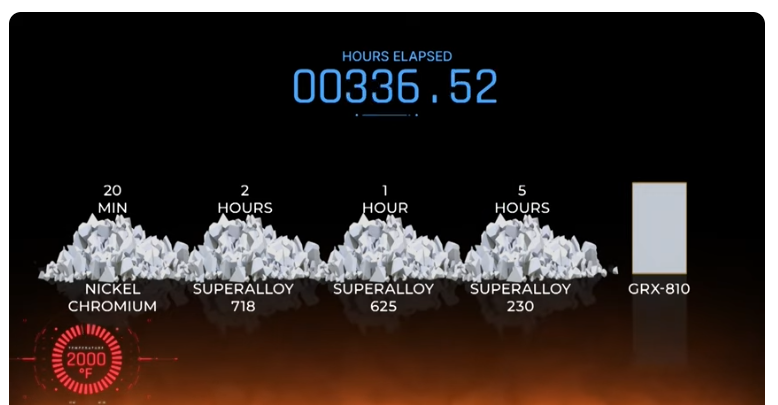
The ODS alloy mentioned above, GRX-810, is intended for use in aerospace applications. Specific possibilities include liquid rocket engine injectors and turbines. For this, the material needed to sustain high temperatures for extended periods of time. The NASA researchers began with the medium-entropy alloy nickel cobalt chromium. Alone it is already noted for strength and ductility at high operating temperatures. In a ResonantAcoustic® mixer, it was combined with yttrium oxide (Y2O3), already used as a high temperature coating. This would prove extremely effective for GRX-810, as it can endure temperatures over 3,000 degrees Fahrenheit and lasts more than 1,000 times longer than existing superalloys.
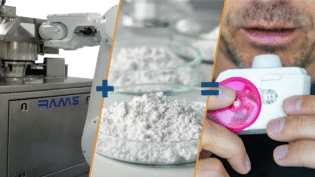
“We tried mechanical alloying, but ball-milling destroyed the morphology of the powder. What was spherical and able to flow in the 3D printer became deformed, platelet-like and had a tendency to stick in the 3D printer. Instead, we coat the metal powder with ceramic oxide using Acoustic Mixing and get a really nice, dense coating on all the powder that doesn’t deform the powder, or affect the flow through the 3D printer,” the team wrote in their case study.
It’s already going into testing. Elementum, one of the co-exclusive licensors of the patent, has a client, Vectoflow, developing a flow sensor.
“These sensors monitor the speed of gases in a turbine and often fail in high-temperature environments. Using GRX-810 could improve fuel efficiency, reduce emissions and decrease the need for replacements,” Elementum wrote in a press release.” [2]
The material is seeing further research. Elementum, Penn State and University of Utah are working with this new powder with cold spray additive manufacturing (CSAM). This process repairs aerospace and space components by spraying them over a part. This option opens up new areas of production.
Elementum’s Chief Technical Officer Jeremy Iten praised the new material, saying,
“A material under stress or a heavy load at high temperature can start to deform and stretch almost like taffy. Initial tests done on the large-scale production of our GRX-810 alloy showed a lifespan that’s twice as long as the small-batch material initially produced, and those were already fantastic.” [2]
New Advanced Material Possibilities
ODS alloys are particularly popular because of their applicability to additive manufacturing (AM), especially laser powder bed fusion. This method is where a laser melts a bed of powder to create the shape. Other methods are possible, at times, using binders. These methods give the possibility of intricate shapes that are otherwise impossible with conventional manufacturing.
This exciting field of research continues to expand due to ResonantAcoustic® technology, making production financially viable. Other new materials only await researchers willing to combine them with acoustic mixing.
GRX-810 was licensed by four different manufacturers shortly after its official unveiling. These manufacturers moved quickly into production, opening up a new market for their business. It was declared the Commercial Innovation of the Year by NASA in October of 2025. Research and production of the material are expanding, representing cost savings and new opportunities.
CITATIONS
- Two modes of grain boundary pinning by coherent precipitates. https://www.sciencedirect.com/science/article/abs/pii/S1359645417305062
- NASA’s GRX-810 Alloy Expands 3D Printing Capabilities for High-Temperature Applications. https://3dprintingindustry.com/news/nasas-grx-810-alloy-expands-3d-printing-capabilities-for-high-temperature-applications-243383/
Image Credit: NASA